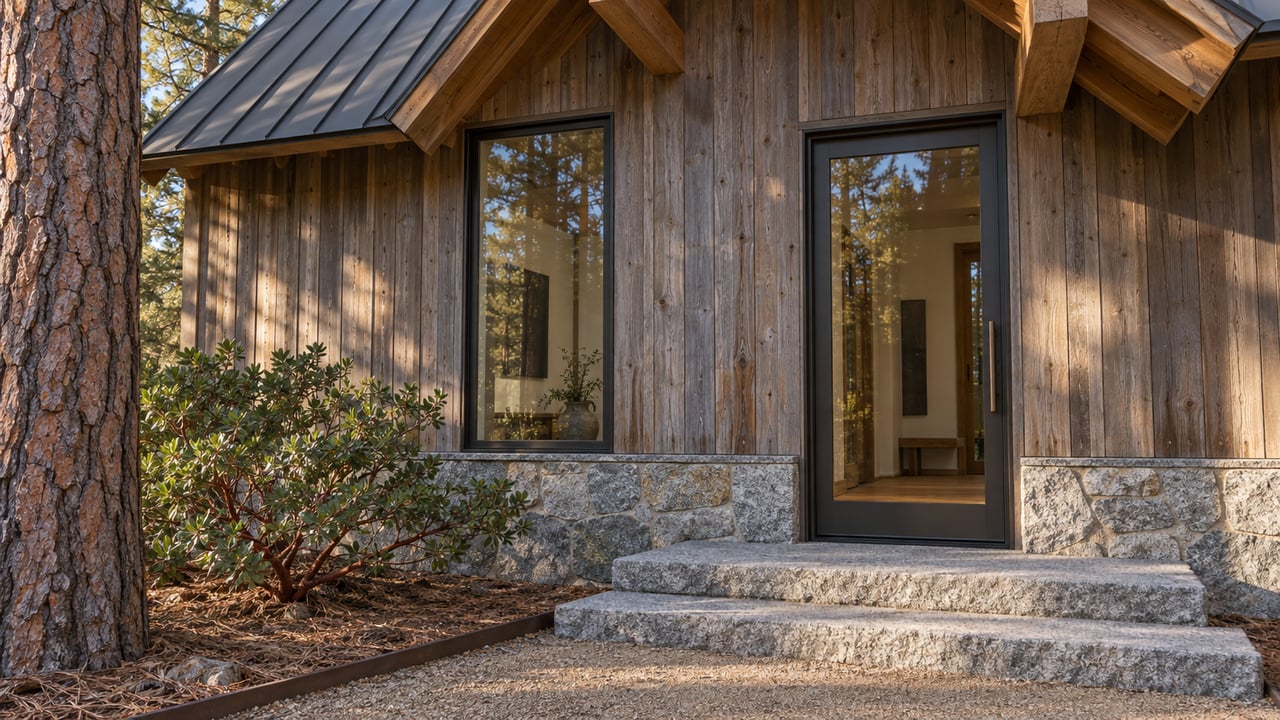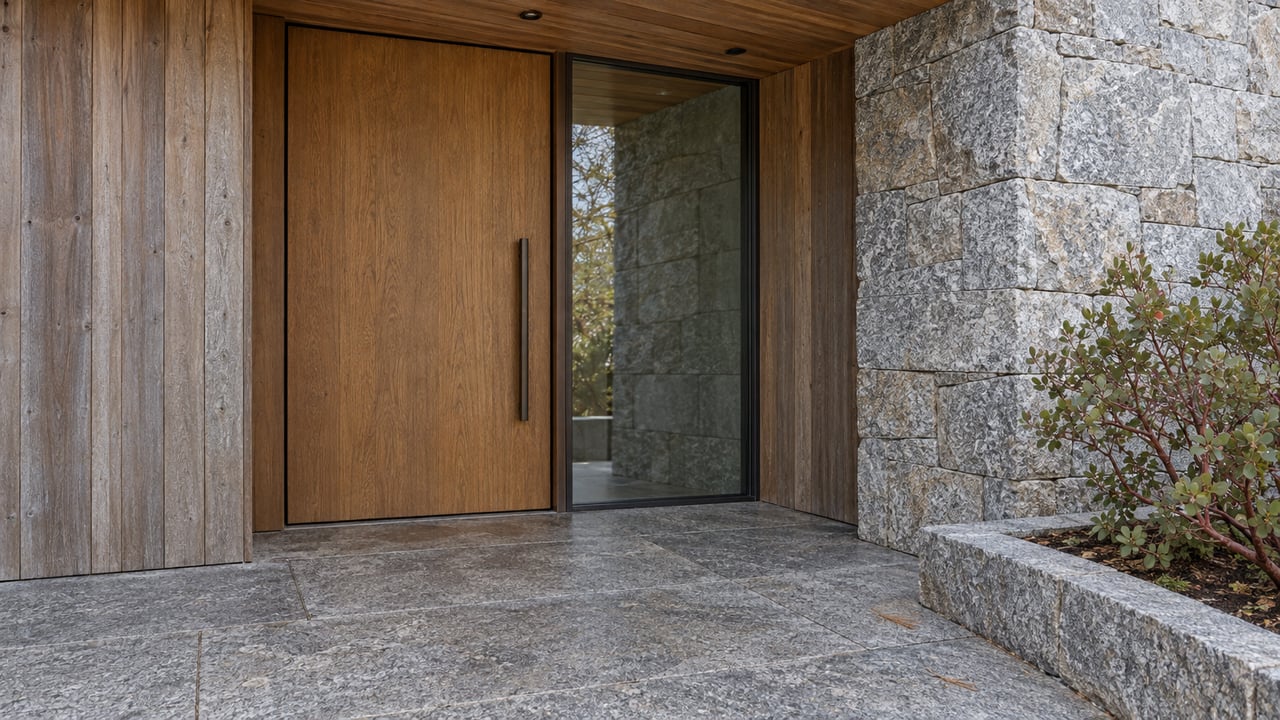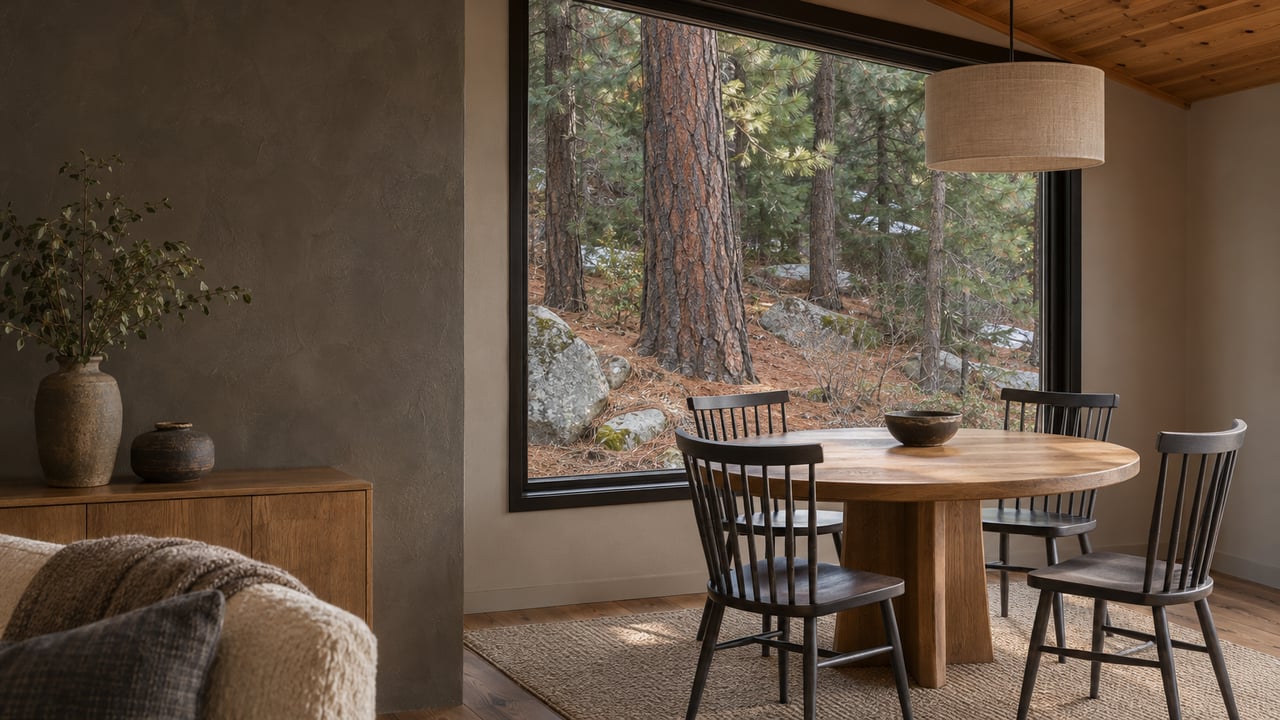
In September, a custom home at 1160 Big Pine Drive in Tahoe City sold for $3,000,000. Sierra Sotheby's International Realty described a main level that opens onto a large deck with lake views and no neighbors behind it. In a quarter with roughly a hundred single-family closings across the North and West Shores, a sale like that moves the average price on its own. A few more like it, or a few fewer, can make the whole shore look like it got richer or poorer, even when the typical house didn't change hands for a different price at all.
That is what happened this year. Across the North and West Shores, the third-quarter average sale price fell by about 30% from a year earlier. The median barely moved. If you're comparing Tahoe City with other parts of the lake and you've seen either number on a portal, the two figures are describing different markets. For a buyer shopping between $1 million and $2 million, the more useful reading is that the middle of the Tahoe City market got faster and tighter in the third quarter of 2026.
Two Prices From the Same Quarter
Sierra Sotheby's Q3 2026 market update for the North/West Shore puts the median single-family sale price at $1.23 million for July through September, compared with $1.24 million in the same quarter of 2025. Over the same window, the average close price dropped from $2.44 million to $1.71 million.
The five-year run of third quarters shows how differently the two measures behave:
| Third quarter | Median close price | Average close price | Homes sold |
|---|---|---|---|
| 2022 | $1.06M | $1.33M | 84 |
| 2023 | $1.20M | $1.69M | 97 |
| 2024 | $1.14M | $2.26M | 90 |
| 2025 | $1.24M | $2.44M | 120 |
| 2026 | $1.23M | $1.71M | 107 |
Over five years the median moved in a narrow band, from $1.06 million to $1.23 million, and its biggest one-year drop was $60,000. The average climbed by more than $1.1 million between 2022 and 2025, then gave back $730,000 in a single year. This year's average sits roughly where it was in 2023. The median is the price of the home in the middle of the line, so it tracks the typical house. The average adds up every sale and divides, so a handful of sales at the top can pull it hundreds of thousands of dollars in either direction. The 2024 and 2025 averages were high because of what sold at the top that year. The 2026 average is lower for the same reason.
Where the Change Happened
Sierra Sotheby's breaks the quarter's single-family closings into price bands. The $500,000 to $1 million band sold 36 homes in Q3 2026 and 36 in Q3 2025. The $1 million to $2 million band sold 45, compared with 49 a year earlier. Homes over $2 million sold 24, compared with 31, a 23% decline. Sales under $500,000 went from four to two.
Seven fewer sales over $2 million account for most of the drop in total closings, from 120 to 107. The scale of the average's decline adds a second point. Losing seven homes from a band of 31 can't pull an average down by $730,000 unless the missing sales, or the ones that replaced them, sat far above the $2 million line. The quarter had fewer of the very large sales that set the shore's average, while the bands that held most of the quarter's sales stayed close to last year's pace.
The Middle Sped Up
Average days on market across the North/West Shore fell from 64 to 47, a 27% drop. Inventory at the end of the quarter was 100 homes, compared with 127 a year earlier, down 21%. Months of supply fell from 3.2 to 2.8, and new listings during the quarter dropped from 122 to 111.
Put those numbers together and the average price looks like a weak guide for a buyer comparing homes around $1.3 million. Fewer homes came to market and fewer were left at quarter's end. The ones that sold went under contract faster than they did in the third quarter of 2025. At 2.8 months of supply, the North/West Shore was further from a buyer's market in Q3 2026 than it was a year earlier.
Tahoe City, Neighborhood by Neighborhood
The same Q3 2026 report lists community-level figures. Each one covers only a few sales, so treat them as a reading of the quarter, not a trend line. Still, they show where the middle of the market sat around Tahoe City this summer.
The Tahoe City community itself recorded 22 single-family sales at a $1.32 million median, with 36 average days on market and 11 homes in inventory at quarter's end. Twenty-two sales over three months is about seven a month, so 11 homes on the market at quarter's end is roughly six weeks of supply at that pace. Talmont matched the $1.32 million median on eight sales, with homes averaging 20 days on market and four left in inventory. Dollar Point was the top of the local range, with six sales at a $2.02 million median, 21 days on market and three homes in inventory. Granlibakken's four sales had a $1.04 million median and 24 days on market, with one home left. Tahoe Park recorded two sales at a $1.52 million median.
Heading south on the West Shore, Sunnyside had 11 sales at a $1.43 million median, a slower 55 days on market, and five homes in inventory. Homewood had 13 sales at a $1.62 million median, 23 days on market and seven homes in inventory. Tahoma is where the numbers turn the other way, with 18 sales at an $875,000 median, 54 days on market and 28 homes in inventory, more homes for sale at quarter's end than the community sold all quarter. To the east, Agate Bay and Carnelian Bay each recorded eight sales at an $898,000 median with 37 days on market.
For a buyer comparing these areas, the spread matters more than the shore-wide figure. The communities nearest Tahoe City's core, including Talmont, Dollar Point and Granlibakken, had short days on market and low inventory relative to their sales, while Tahoma had more choice and more time. Choosing Tahoe City because the shore's average fell would mean shopping in one of the tighter parts of the market on the strength of a number that measured somewhere else. If you're also weighing the West Shore or the wider North Shore, the community figures are the better place to start.
What Buyers Paid For
Local brokers described a pickier buyer this summer. In a September 25 report, the Tahoe Daily Tribune found buyers across the basin favoring turnkey homes at more balanced price points. A broker covering the North and West Shores told the paper that her buyers wanted lake views and lake access but, above all, homes that needed no work after closing. "Sign on the dotted line, grab your toothbrush, come up and enjoy your house," she said. A South Lake Tahoe broker in the same article said homes with a broken deck or in need of a remodel were a harder sell.
That fits the price-band data. The $500,000 to $2 million range, which held 81 of the North/West Shore's 107 third-quarter sales, sold at close to last year's pace, and move-in-ready homes in that range are the ones buyers were described as competing for. The same Tribune report noted that mortgage rates near 7% this summer weighed on financed buyers more than on cash buyers. If you're financing a purchase near the median, you may be competing with all-cash offers on the best-prepared homes.
The top of the market had its own explanation. The North and West Shore broker told the Tahoe Daily Tribune she saw a slowdown on the California side of the lakefront market compared with last year's high volume. She attributed the pause to uncertainty over California's proposed wealth tax and said Bay Area buyers might also be waiting for expected AI company stock offerings. "Luxury high-end buyers are uncomfortable with uncertainty," she said, adding that she expected more activity once the ballot question was settled.
The Ballot Question Is Settled
California voters weighed in on November 3. Proposition 40, the one-time tax measure on that ballot, was failing 52.2% to 47.8% in the California Secretary of State's unofficial results as of November 14, and the results are scheduled for certification by December 11, 2026.
The uncertainty one broker linked to the summer pause at the top of the market has been resolved, and the count of sales over $2 million in the fourth-quarter and first-quarter reports will show what the top band does next. If that count of sales over $2 million rebounds toward last year's 31, the North/West Shore average will likely climb again, possibly by a lot. That rise would have no more to say about a $1.3 million house in Tahoe City than this year's drop did. The figures to watch for the middle of the market are the median, days on market and inventory, and in the third quarter all three pointed to a tight market.
If you're comparing Tahoe City with Incline Village or another part of the lake, apply the same test to every headline price you see. Ask which band of homes moved the number before you decide what it means for the homes you'd actually tour.
If you'd like to go through recent Tahoe City sales in your price band, community by community, Wendy Poore, Realtor can walk you through what sold, how fast it went and what is on the market now. Schedule a consultation, and you can set your search and your offer strategy around the part of the market you're actually shopping in.